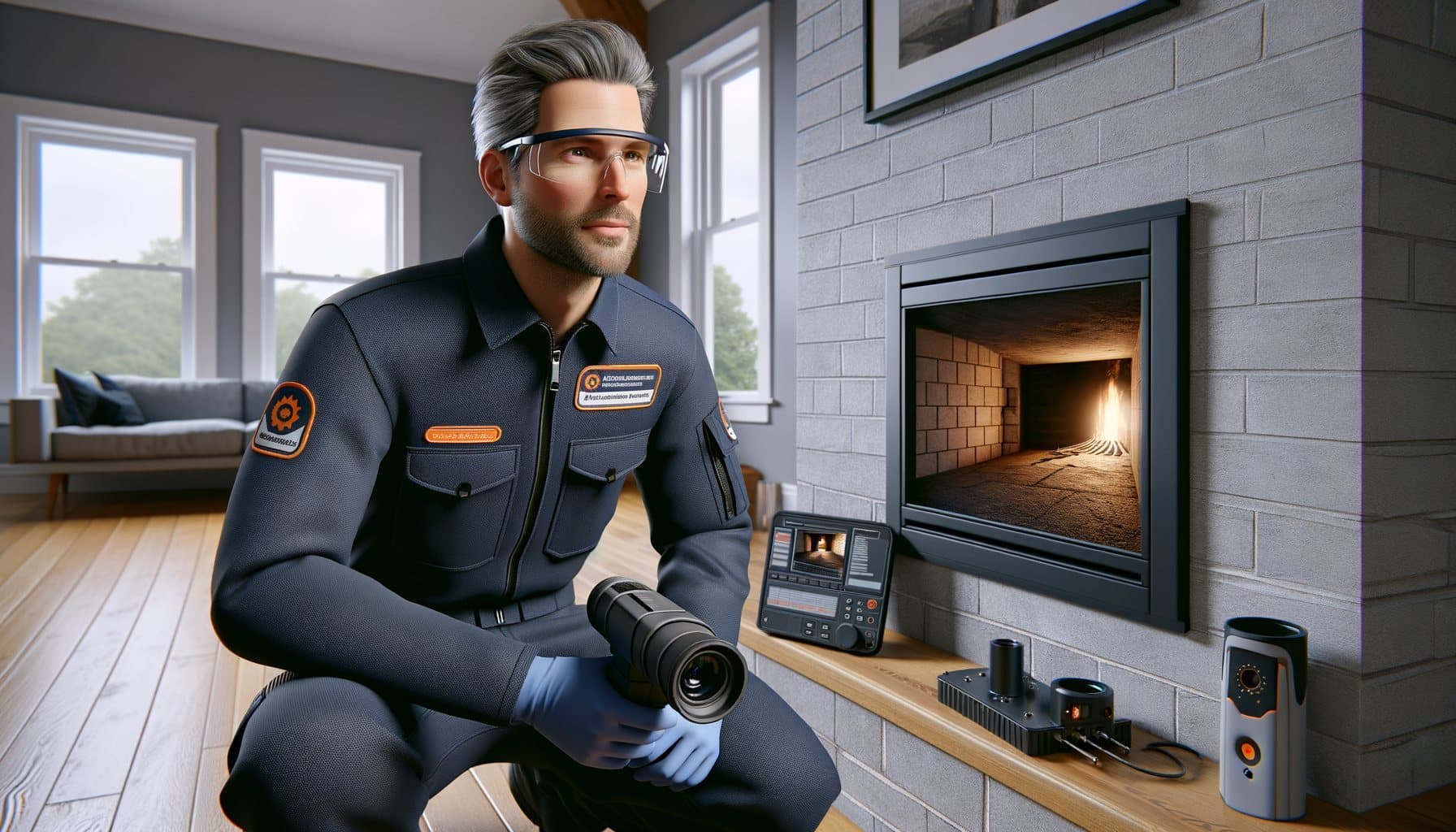
Exterior Inspection
Start from the outside. These items can often be spotted from the ground or rooftop.
Chimney Crown
Check for cracks, chips, or deterioration that could allow water penetration.
Chimney Cap
Ensure the cap is securely attached and the mesh screen is intact to keep out animals and debris.
Flashing
Inspect the metal flashing where the chimney meets the roof for gaps, rust, or separation.
Masonry & Mortar Joints
Look for crumbling mortar, spalling bricks, or leaning structure.
Cricket/Saddle
Verify the diverter behind the chimney is intact and directing water away properly.
Height & Clearance
Chimney should extend at least 3 feet above the roof and 2 feet above anything within 10 feet.
Interior Inspection
Examine the fireplace and its components from inside the home.
Firebox Condition
Inspect firebrick and refractory panels for cracks, missing pieces, or heat damage.
Damper Operation
Test that the damper opens and closes fully and seals properly when closed.
Smoke Chamber
Look for cracks, missing mortar, or deterioration in the smoke chamber walls.
Hearth Extension
Confirm the hearth extends at least 16 inches in front and 8 inches to each side.
Ash Dump & Cleanout
Ensure the ash dump door functions and the cleanout area is accessible and clear.
Glass Doors & Screens
Check that fireplace doors close tightly and mesh screens are free of holes.
Chimney Flue & Liner
The flue is the most critical component for safe operation. These items typically require professional inspection tools.
Liner Integrity
Inspect the flue liner for cracks, gaps, or missing sections that could allow heat to reach combustibles.
Creosote Buildup
Check for creosote accumulation, Stage 3 (glazed) creosote is a serious fire hazard.
Blockages & Obstructions
Look for nests, leaves, collapsed liner sections, or any debris blocking the flue.
Flue Tile Alignment
Verify that flue tiles are properly aligned and mortar between tiles is intact.
Connector Pipe (if applicable)
Ensure stovepipe connections are secure, properly pitched, and free of corrosion.
Safety Systems
These safety measures protect your household even if something goes wrong.
Carbon Monoxide Detectors
Verify CO detectors are installed near sleeping areas and on every level of the home.
Fire Extinguisher
Keep a rated fire extinguisher within reach of the fireplace. Check the pressure gauge.
Combustible Clearances
Maintain at least 36 inches of clearance between the fireplace opening and any combustibles.
Smoke Detector Function
Test smoke detectors in the room with the fireplace and replace batteries annually.
When to Schedule a Professional Inspection
Annual Maintenance
Schedule every year before the burning season begins, ideally in late summer or early fall.
Buying or Selling a Home
A Level 2 inspection is recommended during any real estate transaction involving a fireplace or chimney.
After a Chimney Fire
Any chimney fire, even a small one, requires a Level 2 inspection to assess hidden structural damage.
After Severe Weather
Hurricanes, lightning strikes, or earthquakes can cause damage that isn't visible from the ground.
Frequently Asked Questions
How often should I have my chimney inspected?
The National Fire Protection Association (NFPA 211) recommends annual chimney inspections regardless of how often you use your fireplace. Even unused chimneys can develop issues from weather, animals, or settling.
What are the different levels of chimney inspection?
There are three levels: Level 1 is a basic visual inspection for regularly used chimneys with no changes. Level 2 includes video scanning and is required when selling a home or after a chimney fire. Level 3 involves partial demolition to access concealed areas when serious hazards are suspected.
Can I inspect my chimney myself?
You can perform a basic visual check using this checklist, but a professional inspection is essential. Technicians have specialized cameras, tools, and training to identify hidden hazards that are invisible to the untrained eye.
What is creosote and why is it dangerous?
Creosote is a tar-like byproduct of burning wood that accumulates inside the flue. It is highly flammable and is the leading cause of chimney fires. There are three stages, with Stage 3 (glazed creosote) being the most dangerous and difficult to remove.
How much does a professional chimney inspection cost?
It depends on which NFPA 211 level the situation calls for, a Level 2 with a camera survey of the flue is more work than a Level 1, plus the number of flues and roof access. We tell you which level your situation needs before booking rather than after, and the estimate is free.
Standards This Guidance Follows
The thresholds on this page come from published national standards, not from our own opinion. Both sources are linked so you can check them yourself.
- NFPA 211National Fire Protection Association
Chimneys, fireplaces and vents are to be inspected at least once a year for soundness, freedom from deposits and correct clearances, regardless of how often the fireplace is actually used.
View the source - USFA heating fire statisticsU.S. Fire Administration (FEMA), Topical Fire Report Series Vol. 21 Issue 10
From 2017 to 2019 US fire departments responded to an annual average of 34,200 residential building heating fires, causing 165 deaths, 600 injuries and $367 million in property loss. 49.43% of those fires were confined to the chimney or flue.
View the source - CSIA sweeping thresholdChimney Safety Institute of America
CSIA recommends masonry fireplaces be swept at 1/8" of sooty buildup, and sooner if any glaze (creosote) is present. Factory-built fireplaces should be swept when any appreciable buildup occurs.
View the source
A yearly inspection is the baseline the standard sets. If you would like one scheduled, request a free estimate and we will tell you what we find before any work is quoted.