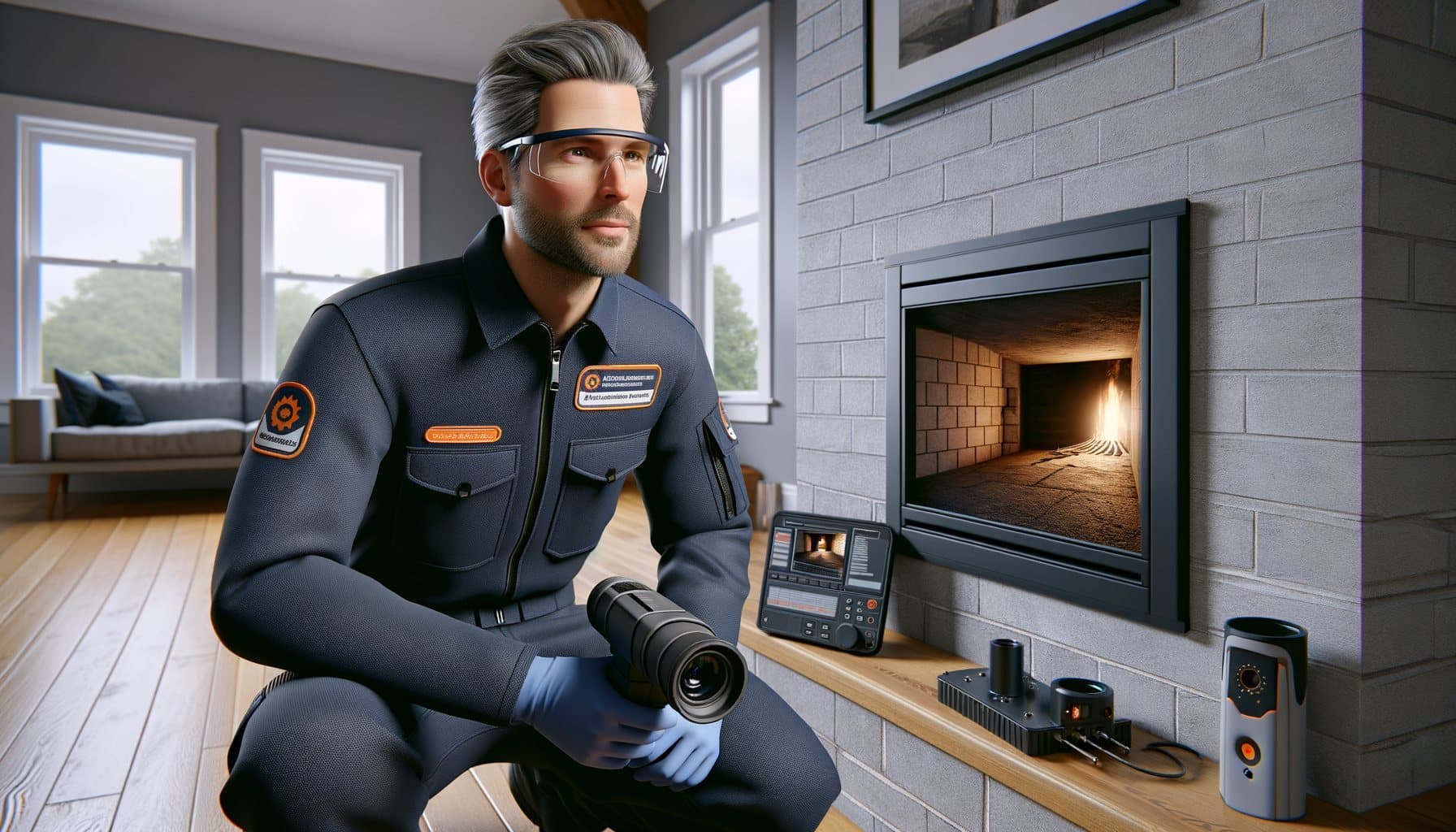
Our Chimney Inspection Includes
Benefits of Professional Chimney Inspection
What the Work Involves
Each chimney inspection job runs through these 7 steps, in this order.
Establish which NFPA 211 level the situation calls for, and say why
Check the readily accessible exterior, crown or chase cover, cap, flashing, masonry
Check the firebox, damper, smoke chamber and appliance connection
Survey the flue interior, by camera where the level requires it
Assess liner continuity, joints, corrosion and water damage
Report findings in writing with photographs of your chimney
Separate what is a hazard now from what is worth monitoring
Chimney Inspection
An inspection answers one question: is this chimney safe to use as it is? Everything else, what to repair, what to spend, whether to reline, follows from that answer. NFPA 211 calls for a chimney to be inspected annually, and it defines three levels of inspection with genuinely different scopes. Knowing which one you need is most of what this page is for.
Free estimates, no obligation. Call (888) 882-2070.
The Three Levels, and Which One You Need
Level 1
For a chimney in continued service under the same conditions, same appliance, same fuel, nothing has changed and no problem is suspected. It covers the readily accessible portions of the chimney exterior and interior, and the accessible connections to the appliance. No dismantling, no opening up. This is the routine annual check.
Level 2
Required when something has changed. Specifically: a change of appliance, a change of fuel, a change to the flue's shape or material, after an event that may have damaged the chimney, a chimney fire, a lightning strike, an earthquake, a named storm, and on the sale or transfer of the property. It includes everything in Level 1 plus accessible attics, crawl spaces and basements, and a camera survey of the flue interior. Still no demolition.
The property-transfer trigger is the one most people are unaware of. If you are buying or selling a home with a fireplace, a Level 2 is the appropriate inspection, and a Level 1 does not cover it.
Level 3
When a Level 1 or 2 gives reason to suspect a hidden hazard that cannot be assessed without access. It permits removal or demolition of parts of the structure or building, a chimney crown, a section of wall, to see what is behind. It is not something to book speculatively; it follows from a finding.
The practical rule: routine annual is Level 1; anything changed, anything happened, or the house is changing hands is Level 2; Level 3 comes out of a Level 2 finding, not out of a phone call.
What an Inspection Should Actually Look At
- The flue interior. The part that matters most and the part you cannot see. Cracked or displaced clay tiles, gaps at the joints, corrosion in a metal liner, water staining, and continuity from firebox to termination.
- Deposits. How much, and what stage of creosote, first-degree flakes, second-degree tar, or glazed third-degree, which cannot be swept off and represents a real fire risk.
- The firebox and damper. Firebrick and joint condition, and whether the damper actually operates.
- The smoke chamber. Where deposits concentrate and where a corbelled or unparged chamber can be a hazard.
- The top. Crown or chase cover, cap, storm collar, the components that let the water in.
- The roof line. Flashing, and whether water is entering there.
- Clearances. Whether combustible framing sits closer to the flue than it should, which is one of the things a Level 2 camera survey exists to find.
In Florida, Water Is What an Inspection Finds
Most chimney inspection guidance is written for homes that burn wood regularly through a cold winter, where the inspection is looking for creosote. Here it usually is not.
Because relatively few Florida chimneys burn wood often, and many are gas or purely decorative, the findings that recur are:
- Water damage to the flue. Mortar joints between clay tiles washed out, metal liners corroded from the inside. Invisible from the room, and at Florida humidity it progresses continuously because nothing dries between rain events.
- Animal entry and nesting. A blocked vent path arriving in a single season through an uncapped flue.
- Seized dampers. Corroded in place from disuse, frequently stuck open, with conditioned air leaving the house all year.
- Acidic condensate damage on gas flues. An oversized or uninsulated flue lets gas exhaust cool and condense, and that condensate attacks joints and liners.
- Deterioration on a chimney nobody uses. A decorative fireplace still has a flue penetrating the roof, and that penetration still leaks.
Which is why the honest reason to inspect a barely-used Florida chimney is not creosote. It is that the structure is weathering whether or not you light fires, and the roof penetration is a water risk regardless.
What a Report Should Contain
An inspection that produces a verbal "you need work" is not an inspection. A report should give you:
- Which level was performed.
- Photographs of your chimney showing identifiable features, not stock images that could be of any flue. This is the single most useful thing to insist on.
- Findings separated by urgency: what makes the chimney unsafe to use now, what should be addressed this year, and what is worth monitoring.
- What was not accessible and therefore not assessed.
That last item matters. An inspection has limits, and a report that does not state them is overclaiming.
Sales Pressure, and How to Handle It
Inspections are sometimes used as a route to selling major work, and the pattern is recognisable: dramatic findings on a first visit, urgency attached, photographs that could be of anyone's chimney, and a request to authorise expensive work the same day.
Reasonable protection, and it applies to us as much as to anyone: get the findings in writing with identifiable photographs, and treat any urgent same-visit recommendation as grounds for a second opinion. The exception is genuinely unsafe operation, if an inspection finds the flue cannot safely contain combustion gases, the correct response is to stop using the appliance immediately, and that is not a sales tactic but a shutdown.
What Drives the Cost
The words "chimney inspection" cover work of very different size. At one end, a Level 1 on a single clean, reachable flue: readily accessible exterior and interior, the appliance connection, nothing opened up. At the other, a Level 3 on a multi-flue chimney, opening up part of the structure to reach a hazard a Level 2 could only suspect.
What the chimney decides
- Which level the situation calls for. Not a preference. A change of appliance or fuel, an event that may have damaged the chimney, or a sale of the property puts you in Level 2, which adds accessible attics and crawl spaces plus a camera survey of the flue.
- Number of flues. A stack carrying more than one flue is more than one survey, each with its own liner condition, deposits and termination.
- What is sitting inside it. A heavily sooted flue cannot be assessed until it is clean, and a nest or debris stops a camera reaching the termination, so the contents decide whether clearing comes first.
- Access. Roof height and pitch govern how the crown or chase cover, cap and flashing get looked at, and a Level 2 needs the attic and crawl space reachable too.
What you decide
- Less than on most work here. The level follows from your circumstances, not your budget, so the biggest variable is not yours to set.
- Sweeping now or on a second visit. Where the flue must be cleaned before it can be read, one visit saves a return trip; splitting them lets you see the findings first.
- Whether to open up after a finding. Level 3 is yours to authorise or decline once you know what a Level 1 or 2 found and why.
- A documented inspection or a free one. A free inspection is usually a sales visit and will not give you the written report with photographs of your own chimney that a property transfer or a claim requires.
We tell you which level you need before booking rather than after. On site the crew works the chimney from firebox to termination and reports in writing: photographs of identifiable features of your chimney, findings separated by urgency, and a note of what could not be accessed. Any repair it turns up is then quoted as a free written, itemised estimate. A number over the phone would have to assume a level, a flue count, what is in the flue and a roof.
What to Ask Before You Book
- Which NFPA 211 level are you performing, and why that one?
- Does it include a camera survey of the flue?
- Will I get a written report with photographs of my own chimney?
- I am buying/selling the house, is a Level 2 what I need? The answer should be yes.
- Will the report say what you could not access?
- My fireplace is gas or unused, what are you looking for? A straight answer talks about water, condensate, animals and the damper.
Free estimates, no obligation, call (888) 882-2070.
Get Started Today
Contact us for a free estimate on chimney inspection services.
Or call us directly:
(888) 882-2070Frequently Asked Questions
How often should a chimney be inspected?
NFPA 211 calls for annual inspection. Note that this is inspection, not cleaning, the two get blurred routinely. A flue that is barely used may not need sweeping for years while still warranting the annual look, because in Florida what the inspection finds is water damage, animal entry, a seizing damper and condensate damage rather than creosote.
What is the difference between Level 1, 2 and 3 inspections?
Level 1 covers readily accessible areas for a chimney continuing in service unchanged, the routine annual check. Level 2 adds accessible attics and crawl spaces plus a camera survey of the flue interior, and is required when the appliance, fuel or flue changes, after an event that may have caused damage, and on sale or transfer of the property. Level 3 permits opening up the structure and follows from a suspected hidden hazard.
I am buying a house with a fireplace. Which inspection do I need?
A Level 2. Property transfer is one of the specific triggers in NFPA 211, and a Level 1 does not cover it because it does not include the camera survey of the flue interior. A general home inspection also does not substitute, it typically covers what is visible from the room and the roof, not the inside of the flue.
What does an inspection actually look at?
The flue interior above all, cracked or displaced tiles, open joints, liner corrosion, water staining and continuity from firebox to termination. Also deposit level and creosote stage, the firebox and whether the damper operates, the smoke chamber, the crown or chase cover and cap, the flashing at the roof line, and clearances between the flue and combustible framing.
Is a free chimney inspection worth having?
It is usually a sales visit rather than an inspection, and it will not produce the documented report a property transfer or an insurance claim requires. That does not make it worthless, but treat any urgent recommendation from one as a reason to get a second opinion rather than a reason to authorise work. Ask whether you will receive a written report with photographs of your own chimney.
What should the inspection report include?
Which level was performed, photographs showing identifiable features of your chimney rather than stock images, findings separated by urgency, unsafe now, address this year, monitor, and an explicit statement of what was not accessible and therefore not assessed. That last item is what distinguishes an honest report from one that overclaims its own coverage.
My fireplace has never been used. Is an inspection pointless?
No, though the reasons differ from a regularly used one. The flue still penetrates the roof, and that penetration still leaks. The damper has likely corroded in place in this humidity. Animals may have nested. And if you now want to light a fire, the question of whether the flue can safely contain combustion gases has not been answered by anything.
Does a gas fireplace need inspecting?
Yes. Gas produces almost no creosote but does produce mildly acidic water vapor, and in an oversized or uninsulated flue that condenses inside the chimney and attacks mortar joints and corrodes liners from within. The vent path also needs confirming clear of debris and nesting, and the burner, pilot and log placement checked.
What happens if the inspection finds a problem?
The report should separate what makes the chimney unsafe to use now from what should be addressed this year and what merely warrants monitoring. If the finding is that the flue cannot safely contain combustion gases, the correct response is to stop using the appliance until it is remedied, that is a shutdown rather than a recommendation, and it is the one situation where urgency is not a sales tactic.
How much does a chimney inspection cost?
It depends on which NFPA 211 level the situation calls for, the number of flues, and access, a Level 2 with a camera survey is more work than a Level 1. If a flue is heavily sooted it may need sweeping before it can be properly assessed, which adds to the visit. We tell you which level you need before booking rather than after.
Chimney Inspection Service Areas
We provide chimney inspection services throughout Florida
Related Services
Chimney problems rarely arrive alone. These are the services most often needed alongside this one.