Our Chimney Cleaning Includes
Benefits of Professional Chimney Cleaning
What the Work Involves
Each chimney cleaning job runs through these 7 steps, in this order.
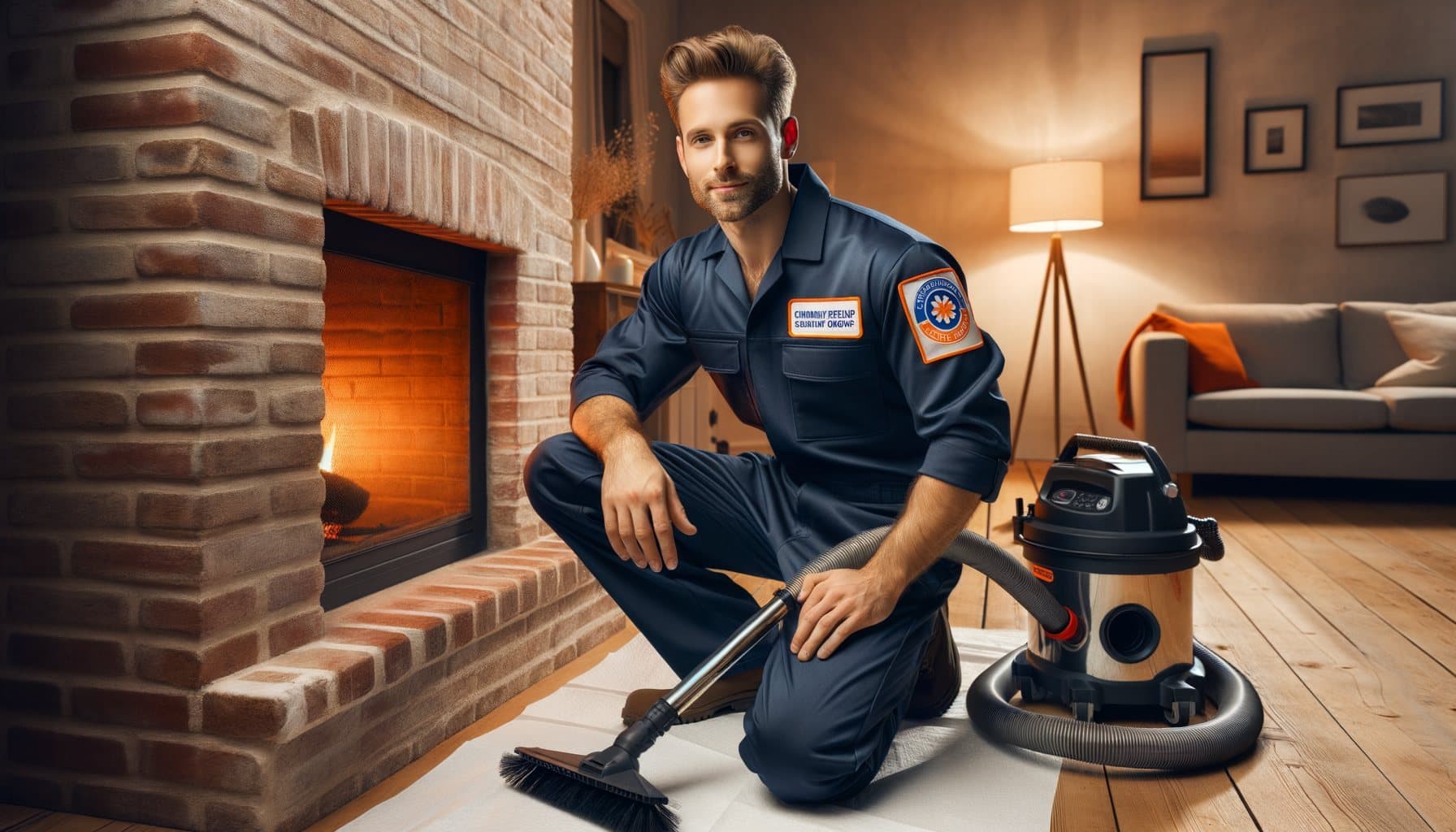
Lay drop cloths and set a sealed vacuum at the firebox opening
Inspect before cleaning, so pre-existing damage is on record
Sweep the flue with brushes sized to it, working the full length
Clean the smoke chamber and smoke shelf, where deposits collect heaviest
Clean the firebox, damper and cap screen
Clear any nesting material, debris or fallen liner pieces
Report findings and say what needs attention and what does not
Chimney Cleaning in Florida
Chimney cleaning is the broader service: the flue plus the firebox, smoke shelf, smoke chamber, damper and cap. A chimney sweep is the flue-focused part of it, the mechanical process of brushing the flue walls. If you want the whole system cleaned and its condition reported, this is the page.
Free estimates, no obligation. Call (888) 882-2070.
The Honest Answer to "How Often?"
The standard answer is annually, and it is worth explaining where that comes from and how it applies here, because most Florida chimneys are not the chimney that guidance was written for.
NFPA 211 calls for chimneys to be inspected annually. That is inspection, not cleaning, a distinction almost every chimney company blurs. CSIA guidance is that a flue needs sweeping once combustible deposits reach about one eighth of an inch. Those are two different triggers: one is a calendar, the other is a measurement.
For a home burning wood several times a week through a northern winter, deposits reach that threshold in a season and the two triggers coincide. That is the situation the annual-sweep advice describes.
Most Florida fireplaces are not that. Many are gas, many are decorative, and many burn wood a handful of times a year or not at all. A flue like that may go years without approaching an eighth of an inch of creosote, so being sold an annual sweep on creosote grounds is being sold something the flue does not need.
What it does still need, and why the annual look is genuinely worth having here:
- Animals and nests. An open or poorly capped flue is a sheltered vertical shaft, and birds, squirrels and raccoons use it. A nest is a blockage in the vent path and a fire risk, and it can arrive in a single season.
- Water damage. The dominant Florida chimney problem. Water working on a flue breaks down mortar joints between clay tiles and corrodes metal liners from the inside, invisible from the room until it is advanced.
- Debris. Leaves, twigs, and fallen pieces of a deteriorating liner accumulate whether you light fires or not.
- Seized dampers. A damper that goes years without moving, in this humidity, corrodes in place. Frequently stuck open, which means conditioned air leaving your house all year.
- Verification. If the fireplace has sat unused and you now want to light it, the question is whether it is safe to, and that is an inspection question, not a cleaning one.
So: yes to the annual look, on Florida grounds rather than on creosote grounds. And if someone quotes you an annual sweep for a gas fireplace on creosote grounds, that is the moment to ask what deposits they actually expect to find.
What a Full Cleaning Covers
The flue is the part everyone knows about. These are the parts that get skipped:
- The smoke chamber, above the damper, where the flue narrows down to the firebox. Deposits collect heaviest here because it is where flue gases slow and cool. It is also the most awkward part to reach, and therefore the first thing a rushed job omits.
- The smoke shelf, the ledge behind the damper. This is where debris, nesting material and fallen soot accumulate, and where evidence of a water problem shows up first.
- The damper itself, cleaned and, importantly, operated. A damper that will not close is an open window; one that will not open is a hazard.
- The firebox, including the condition of the firebrick and joints.
- The cap and spark screen, which clog with soot and reduce draft while still appearing present and correct from the ground.
Gas Fireplaces Need This Too, Differently
A common and costly misunderstanding is that a gas fireplace needs no attention because it produces no creosote. It produces almost none, but it produces something else.
Gas combustion generates water vapor, and that condensate is mildly acidic. In a flue that is oversized for the appliance or uninsulated, exhaust cools enough to condense inside the chimney, and that condensate attacks mortar joints and corrodes liners from the inside. It is a slow, invisible process that ends in a flue that no longer safely contains combustion gases.
Gas appliances also need the burner, pilot assembly and log placement checked, and the vent path confirmed clear. Debris and nesting in a gas flue is exactly as much of a blockage as it is in a wood one. Many manufacturers also require annual service to maintain warranty coverage on the appliance, worth checking your own documentation.
Will It Make a Mess?
It should not, and the answer to this reveals a lot about who you have hired. A proper cleaning runs a sealed negative-pressure vacuum at the firebox opening for the whole job, so the fine soot that actually makes the mess is pulled away from the room rather than escaping into it, along with drop cloths over the hearth and floor.
The distinction matters because fine soot is exactly what a standard shop vacuum blows straight through its filter and back into the room. Ask what vacuum will be used before anyone starts.
Spotting a Bait-and-Switch
Very low advertised prices are a known pattern in this trade, and the mechanics are always similar: an unrealistic headline figure gets someone into the house, and the job then becomes a sales visit for expensive work that may or may not be needed. Signals worth noticing:
- A price well below everyone else, especially one advertised as a special with no site visit.
- Dramatic findings produced immediately, with urgency attached and photographs that could be of any chimney.
- Pressure to authorise significant work on the same visit.
- No willingness to write down what was found and what it means.
- A cleaning that took a very short time and did not include the smoke chamber.
Reasonable protection: ask for findings in writing, ask for photographs that clearly show your chimney, and treat any urgent recommendation made on a first visit as a reason to get a second opinion rather than a reason to sign. A genuine safety problem will still be a problem next week.
What Drives the Cost
This covers the whole system, not the flue alone, so the spread from one job to the next is wide. The smallest version is a lightly used gas flue with everything sound: a light film through flue and smoke chamber, a clear cap screen, nothing on the shelf. The largest is a masonry stack with more than one flue, years of deposits in the smoke chamber, a nest and fallen liner pieces on the shelf, and a clogged cap screen on a steep roof.
What the chimney decides
- The state of the smoke chamber. Deposits collect heaviest above the damper, where flue gases slow and cool, and it is the most awkward part to reach. The biggest single swing in the job.
- How long since the last cleaning. How heavy the deposits are follows from that, and heavy is slower.
- What is on the smoke shelf. Nesting material and debris have to come out, and a nest is a separate piece of work. Fallen liner pieces point to a problem cleaning does not fix.
- Flue height, flue count and access. A second flue is a second setup, and reaching the cap and spark screen depends on roof height and pitch.
- Appliance type. A gas unit needs the burner, pilot assembly and log placement checked and the vent path confirmed clear. A wood firebox does not.
What you decide
- The whole system or just the flue. The narrower job is a chimney sweep: the flue walls brushed, leaving out firebox, smoke chamber, damper and cap.
- What level of inspection this calls for. A chimney continuing in service as before is a different question than one where the appliance, fuel or flue is changing, or the house is being sold.
- What happens to what gets found. Findings say what needs attention and what does not, and acting now, later or after a second opinion is your call.
The damper gets operated and the smoke chamber looked into before any number is written: that is where the cost lives, and none of it shows from the room. A seized damper is not one of the variables: restoring one corroded from disuse is part of the cleaning. The crew assesses it on site and leaves a free written, itemised estimate separating the cleaning from anything found with it. A phone figure prices the easy part and guesses at the awkward one.
What to Ask Before You Hire Anyone
- Does the price include the smoke chamber and smoke shelf, or only the flue?
- What vacuum do you use at the firebox opening?
- Will I get written findings and photographs of my chimney?
- My fireplace is gas / barely used, what exactly are you expecting to find? A good answer talks about debris, moisture and the damper, not creosote.
- Are you inspecting as well as cleaning, and to what level?
- Will you check the damper actually operates?
Free estimates, no obligation, call (888) 882-2070.
Get Started Today
Contact us for a free estimate on chimney cleaning services.
Or call us directly:
(888) 882-2070Frequently Asked Questions
How often does a chimney need cleaning in Florida?
The annual figure comes from NFPA 211, which calls for annual INSPECTION rather than annual cleaning. CSIA guidance is to sweep once deposits reach about an eighth of an inch. A Florida fireplace burning wood a few times a year may go years without reaching that, so the annual visit here is justified by animals, debris, water damage and a seizing damper, not by creosote volume.
What is the difference between chimney cleaning and a chimney sweep?
A sweep is the flue-focused mechanical process, rods and brushes working the flue walls. Cleaning is the broader service that also covers the firebox, smoke shelf, smoke chamber, damper and cap screen. The smoke chamber is the part most often left out of a cheap job, because it is above the damper and the most awkward area to reach.
Does a gas fireplace need cleaning?
Yes, for different reasons. Gas produces almost no creosote but does produce mildly acidic water vapor, and in an oversized or uninsulated flue that condenses inside the chimney and attacks mortar joints and liners from within. The burner, pilot and log placement need checking, the vent path needs confirming clear, and many manufacturers require annual service to maintain warranty coverage.
My fireplace is never used. Do I still need this?
Probably, though not for creosote. An unused flue still collects debris and fallen liner material, still attracts birds, squirrels and raccoons, and still suffers water damage, which in Florida humidity progresses continuously. A damper left unmoved for years in this climate commonly corrodes in place, often stuck open, which means conditioned air leaving the house all year.
Will chimney cleaning make a mess in my home?
It should not. A proper cleaning runs a sealed negative-pressure vacuum at the firebox opening throughout, which pulls fine soot away from the room rather than letting it escape into it, plus drop cloths over the hearth and floor. Fine soot is the part that makes the mess and the part a standard shop vacuum blows straight through its filter, ask what vacuum will be used before work starts.
What is a smoke chamber and why does it matter?
The area above the damper where the flue narrows down toward the firebox. Deposits collect heaviest there because flue gases slow and cool at that point. It is also the most awkward part of the system to reach, which makes it the first thing a rushed or underpriced job leaves out. If a quote does not mention it, ask whether it is included.
How can I tell if a cheap chimney sweep offer is a bait-and-switch?
The pattern is an unrealistic headline price to get into the house, followed by dramatic findings and pressure to authorise expensive work the same day. Warning signs: a price well below everyone else, photographs that could be of any chimney, urgency attached to a first visit, and unwillingness to put findings in writing. A genuine safety problem will still be there next week, get a second opinion.
Do you inspect as well as clean?
We inspect before cleaning, so any pre-existing damage is on record rather than discovered afterwards, and we report what we find with a clear statement of what needs attention and what does not. NFPA 211 defines inspection levels, Level 1 for a chimney in continued service under the same conditions, Level 2 when the appliance, fuel or flue changes or the property is being sold, Level 3 when a hidden hazard is suspected.
Why will my damper not open or close?
Most often corrosion from disuse, which Florida humidity accelerates considerably. A damper that has not moved in years commonly seizes, and it frequently seizes open, meaning conditioned air has been leaving your house continuously and outside air coming in. It is checked and operated as part of a cleaning, and freeing or replacing it is usually straightforward.
How much does chimney cleaning cost?
It varies with flue height, the number of flues, how heavy the deposits are, access, and appliance type, gas servicing involves burner and pilot work a wood firebox does not. Removing an animal nest is separate work. A quote far below what others are quoting is worth scepticism; one far above should come with a written explanation of what makes your chimney different.
Chimney Cleaning Service Areas
We provide chimney cleaning services throughout Florida
Related Services
Chimney problems rarely arrive alone. These are the services most often needed alongside this one.