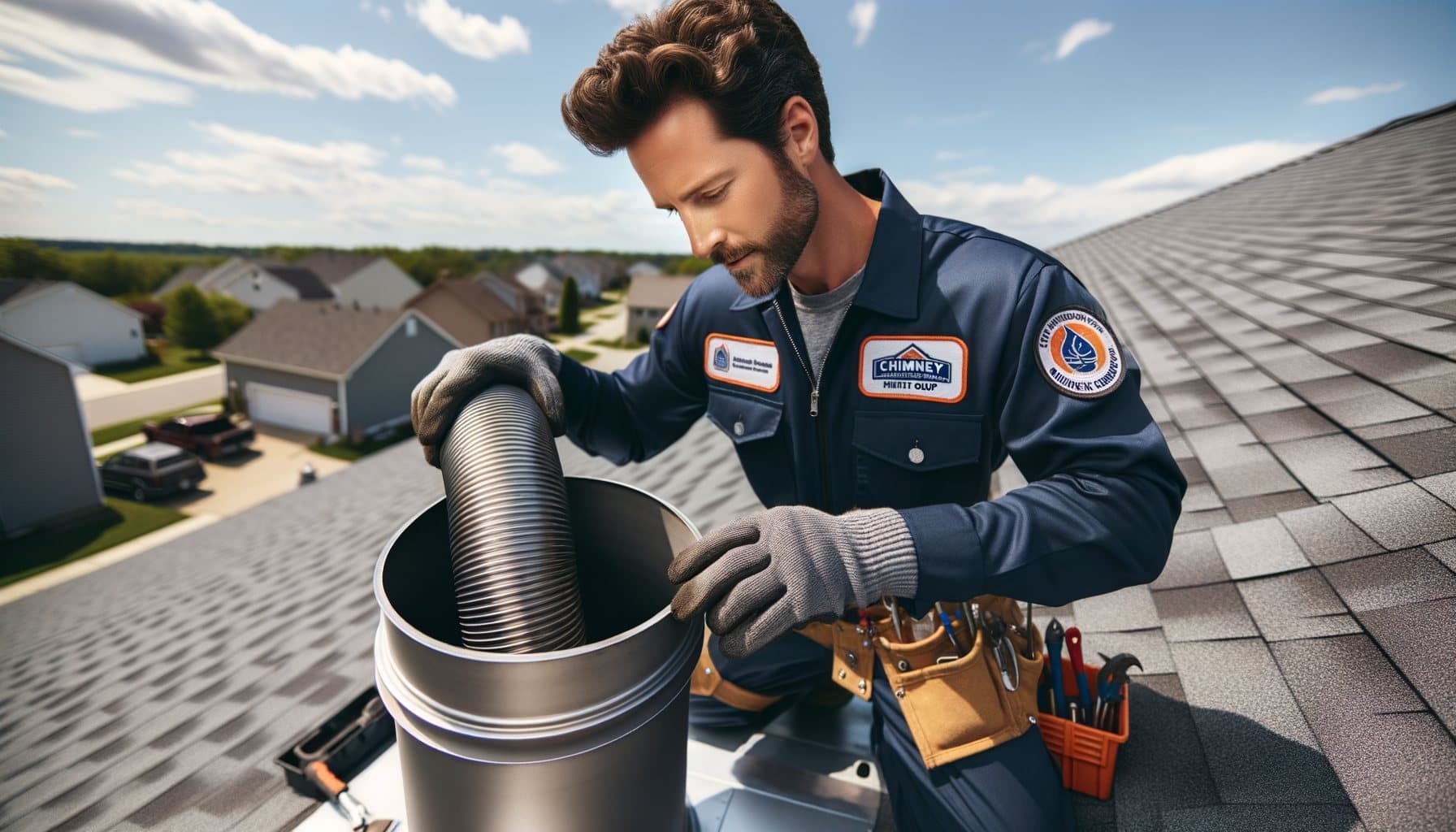
Our Chimney Relining Includes
Benefits of Professional Chimney Relining
What the Work Involves
Each chimney relining job runs through these 7 steps, in this order.
Camera-survey the flue and record the actual condition of the liner
Measure the flue and the appliance outlet, and calculate correct sizing
Recommend liner type, grade and whether insulation is needed, with reasons
Put liner grade, diameter, insulation and exclusions in writing
Remove or leave the old liner in place as appropriate
Install the liner with insulation, top plate, storm collar and termination
Confirm continuity and draft, and check the appliance connection
Chimney Relining
Relining installs a new continuous liner inside an existing chimney, restoring a gas-tight path from the appliance to the top. It is safety work rather than cosmetic work, an unlined or failed flue can let combustion gases, including carbon monoxide, pass through mortar joints into living space, and can let heat reach framing that should never be near it.
It is also expensive, which is why the first question is whether you actually need it. Free estimates, no obligation, call (888) 882-2070.
Do You Actually Need It?
Relining is genuinely necessary in these situations:
- The flue is unlined. Common in older masonry chimneys. Nothing separates flue gases from the mortar joints, and codes require a liner for fuel-burning appliances.
- Clay tiles have cracked, spalled or separated. Gaps at the joints are a direct path for gases into the surrounding masonry and any adjoining cavity.
- A metal liner has corroded through. Common where acidic condensate has been working on it, and near the coast where salt accelerates it.
- The appliance is changing. A new appliance, a different fuel, or a wood-to-gas conversion changes the flue requirement, and the existing flue is frequently the wrong size for it.
- The flue is badly oversized for the appliance. An oversized flue lets exhaust cool before it reaches the top, which produces condensation and poor draft, the fix is a correctly sized liner inside it.
- After a chimney fire. Heat damage to a clay liner is often not visible without a camera, and a fire-damaged liner should be assumed compromised until surveyed.
And where it is not the answer: minor surface cracking in otherwise sound clay tile can sometimes be sealed rather than relined; a chimney whose problem is water entering at the crown or flashing needs those fixed, not a liner; and a flue that is merely dirty needs a sweep. If a liner is quoted without a camera survey having been done, ask what the recommendation is based on.
Sizing Is the Part That Gets Wrong
A liner is sized to the appliance outlet, not to the space available in the chimney. This is the most common technical error in relining, and it goes both ways.
Too large and exhaust gases cool before they reach the top. Cool exhaust means weak draft and, with gas or oil, condensation forming inside the liner. That condensate is acidic and attacks the liner from the inside, so an oversized liner shortens its own life.
Too small and the appliance cannot vent properly, which is a safety problem rather than a performance one.
A wood stove insert typically vents through six inches, some units eight. A relining quote should state the diameter and relate it to your appliance's outlet. "We will fit the biggest liner that goes in" is not sizing.
Materials and Types
Stainless steel, the normal choice
316Ti is a titanium-stabilised grade that resists the acidic condensate produced by gas and oil, and it is the appropriate specification for those fuels. 304 is used for wood-burning applications where that condensate is not the issue. Ask which grade is being fitted and why, "stainless steel" alone is not a specification.
Flexible or rigid
Flexible corrugated liner will negotiate offsets, which most masonry chimneys have. Rigid liner has a smoother bore and slightly better flow characteristics but only suits a flue that runs genuinely straight. The flue gets measured and checked for offsets before this is decided, a rigid liner cannot pass an offset a flexible one will.
Aluminium
Suitable only for certain gas appliances, and not for wood or oil. Cheaper, and the reason to be clear which fuel your appliance burns before accepting a quote that specifies it.
Cast-in-place
A poured cementitious liner, which also adds structural strength to a deteriorating chimney. The largest investment of the options and worth considering where the masonry itself is weak.
Insulation Is Not an Upsell
An insulated liner keeps exhaust hotter on its way up, which improves draft and, the important part, reduces the condensation that destroys liners from within. Where a liner sits inside a much larger flue, or where a chimney runs up an exterior wall and stays cold, insulation makes a material difference to how long the liner lasts.
It is often presented as optional. On an oversized flue it is closer to necessary, and a quote that leaves it out on such a flue is quoting a shorter-lived installation.
The Florida Angle
- Gas condensate is the main liner-killer here, not creosote. Many Florida fireplaces are gas or converted, and gas exhaust carries water vapor that condenses in a cool or oversized flue. That condensate is mildly acidic and corrodes liners from the inside. It is a slow, invisible process, and it is why 316Ti matters on a gas application.
- Water from above does the rest. A cracked crown, a rusted chase cover or a missing cap lets rain into the flue, where it washes out the mortar joints between clay tiles and corrodes metal liners. Relining without fixing the water source means the new liner starts the same clock.
- Salt air. Near the coast, salt accelerates corrosion of anything metal in the flue system, including the termination and top plate.
- Freeze-thaw does not damage flues here. Most national relining content attributes clay-tile failure to it. In Florida the causes are water, condensate and heat.
- Rarely-used flues still fail. A decorative fireplace's flue is still weathering, and its liner still deteriorates through water rather than use.
Fix the Water First
Worth saying plainly because it is expensive to get wrong: if water has been entering the flue, the source needs fixing as part of the job, not afterwards. That means the crown, the cap, or on a prefab chimney the chase cover. A new stainless liner installed under a cracked crown is a new liner with water running down it.
What Drives the Cost
Relining covers a very wide range of work. At the small end is a short, straight flue taking a correctly sized stainless liner fed from the top, the existing clay tile left where it sits. At the large end is a tall flue with several offsets where the tile has to be broken out to gain the diameter the appliance needs, an insulated liner behind it, and the crown that let the water in rebuilt too.
What the chimney decides
- Height and offsets. Liner is priced by the foot, and most masonry chimneys change direction somewhere, which rules out rigid liner and slows the feed.
- What is already in the flue. A new liner can often pass down inside existing clay tile. Tile that leaves too little room, or has come apart and is blocking the way, must be demolished first, which is heavy work.
- The appliance and its fuel. Diameter comes from the appliance outlet, grade comes from the fuel, 316Ti for gas and oil, 304 for wood. Neither is a preference.
- How oversized the flue is. Inside a much larger flue, insulation moves from optional to close to necessary, because exhaust that cools on the way up condenses in it.
- What is happening above. A cracked crown, a missing cap or a rusted chase cover is why many liners fail here, and leaving it starts the new one on the same clock.
What you decide
- Whether to reline at all. Where the survey shows light surface cracking in tile that is otherwise sound, sealing it is a genuine alternative. Separated sections are not that case.
- Stainless or cast-in-place. Where the masonry itself is weak, a poured liner adds structural strength as well as a flue. It is the largest option and unnecessary on a sound chimney.
- Insulation on a borderline flue. Badly oversized, and it is not really a choice. Slightly oversized, and it weighs a lower figure now against a longer-lived liner.
- Whether the water source is dealt with now. It can be scheduled separately, which pays for the access twice and runs the new liner wet in the meantime.
Which is why the survey comes before the number. The crew camera-surveys the flue, measures the run and the appliance outlet, and writes up grade, diameter, insulation, demolition and exclusions in a free written, itemised estimate. A phone figure has to assume the height, assume the flue runs straight, assume the tile leaves room and assume nothing above leaks. Those assumptions are the job.
What to Ask Before You Hire Anyone
- Did you camera-survey the flue, and can I see the footage? This is the question. A relining recommendation without one has no basis.
- What diameter, and how does that relate to my appliance's outlet?
- What grade, 304, 316Ti, or aluminium, and why that one for my fuel?
- Is insulation included, and if not, why not on this flue?
- Is the water source being fixed as part of this?
- Could this flue be repaired rather than relined? Sometimes the honest answer is yes.
Free estimates, no obligation, call (888) 882-2070.
Get Started Today
Contact us for a free estimate on chimney relining services.
Or call us directly:
(888) 882-2070Frequently Asked Questions
How do I know if my chimney needs relining?
It needs a camera survey to know, and a recommendation made without one has no basis. Relining is genuinely required when the flue is unlined, when clay tiles have cracked or separated leaving gaps at the joints, when a metal liner has corroded through, when the appliance or fuel is changing, when the flue is badly oversized for the appliance, and after a chimney fire.
Does an unlined chimney have to be relined?
Codes require a liner for fuel-burning appliances, and the reason is direct: without one, nothing separates flue gases from the mortar joints, so combustion products including carbon monoxide can pass into the surrounding masonry and any adjoining cavity, and heat can reach framing that should never be near it. Unlined flues are common in older masonry chimneys.
What size liner do I need?
It is sized to the appliance outlet, not to the space available in the chimney. This is the most common technical error in relining. Too large and exhaust cools before reaching the top, giving weak draft and condensation that corrodes the liner from within. Too small and the appliance cannot vent safely. A wood stove insert typically vents through six inches, some units eight.
What is the difference between 304 and 316Ti stainless?
316Ti is a titanium-stabilised grade that resists the acidic condensate gas and oil appliances produce, which makes it the appropriate specification for those fuels. 304 is used for wood-burning applications where that condensate is not the concern. "Stainless steel" on a quote is not a specification, ask which grade and why it suits your fuel.
Flexible or rigid liner?
Flexible corrugated liner negotiates offsets, which most masonry chimneys have. Rigid liner has a smoother bore and marginally better flow but only suits a flue that runs genuinely straight, it cannot pass an offset a flexible liner will. The flue should be measured and checked for offsets before this is decided rather than after.
Do I need the liner insulated?
It is often presented as optional and on some flues it is close to necessary. Insulation keeps exhaust hotter on the way up, which improves draft and reduces the condensation that corrodes liners from inside. Where a liner sits within a much larger flue, or the chimney runs up a cold exterior wall, leaving it out means quoting a shorter-lived installation.
Can a damaged liner be repaired instead of replaced?
Sometimes. Minor surface cracking in otherwise sound clay tile can be sealed with purpose-made products. Extensive damage, separated sections or multiple cracks generally need full relining, and attempting to patch those leaves the hazard while spending money. A camera survey is what distinguishes the two cases.
Will relining fix my draft problem?
Often, yes, if the cause is an oversized flue, common in older homes, where gases cool before reaching the top and the chimney draws poorly as a result. A correctly sized and insulated liner maintains exhaust temperature and improves draft noticeably. If the draft problem has another cause, such as a blockage or a stuck damper, relining is not the fix.
Why do liners fail in Florida if we barely burn wood?
Because the local causes are not creosote. Gas exhaust carries water vapor that condenses in a cool or oversized flue, and that condensate is mildly acidic and corrodes liners from the inside. Water entering from a cracked crown, a rusted chase cover or a missing cap washes out mortar joints between clay tiles. Near the coast, salt accelerates corrosion of everything metal in the system.
How much does chimney relining cost?
It is one of the larger items on a chimney. The variables that move it are chimney height, liner type and grade, diameter, whether insulation is included, whether the old liner has to be broken out, the number of offsets, and any water-source repairs needed at the same time. A figure quoted without a camera survey and a height measurement is a guess.
Chimney Relining Service Areas
We provide chimney relining services throughout Florida
Related Services
Chimney problems rarely arrive alone. These are the services most often needed alongside this one.